
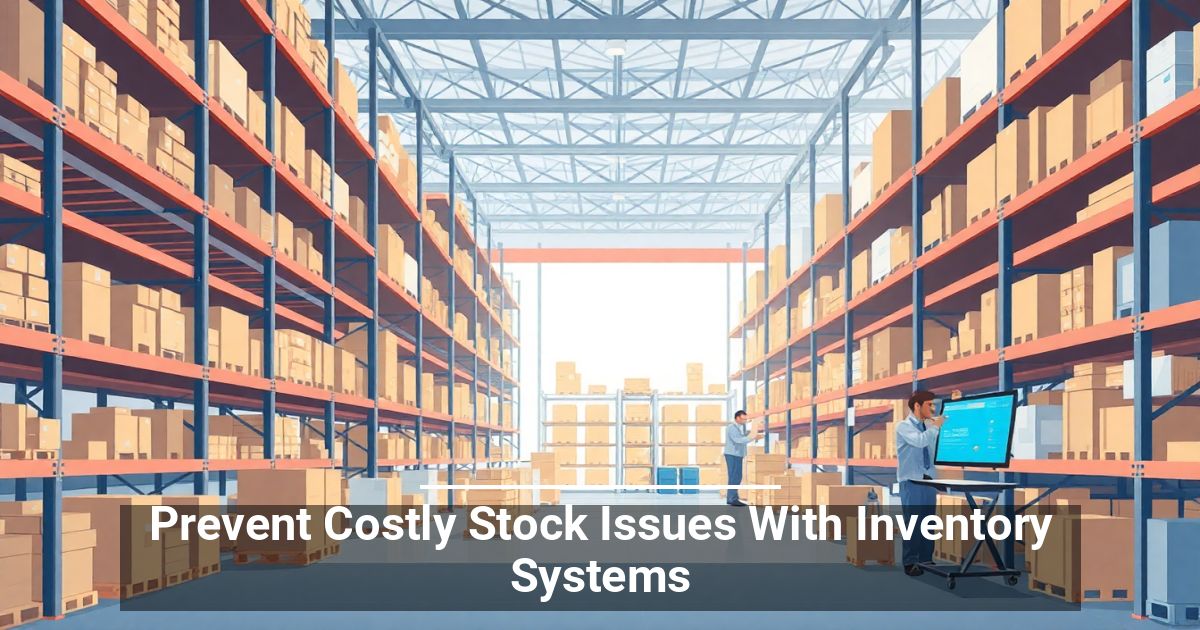
 Many businesses underestimate how quickly small inventory issues turn into costly disruptions. Running out of a bestselling product or discovering unsold backroom inventory are common growth barriers.
Both situations are avoidable. Modern inventory systems provide the real-time inventory visibility you need to keep up with demand, reduce waste, and protect profits.
Stockout and Overstock Prevention Start With Inventory Management
Stockouts usually stem from poor visibility and reactive ordering, which are often solved with automated reorder alerts. Automated inventory systems continuously track stock levels and send reorder alerts before you run out of product. You can easily manage unexpected spikes in demand, supplier delays, or shipping disruptions.
Overstocking causes real financial damage, since excess inventory ties up cash, occupies storage space, and can lead to markdowns. One effective approach to overstock prevention is just-in-time (JIT) replenishment, or ordering goods only when needed. This reduces storage costs and prevents excess stock from sitting idle.
Demand forecasting is one of the strongest defenses against this problem. Modern inventory systems include tools for using historical data, seasonal and sales trends, and market signals to estimate future needs. A system that can automatically handle this analysis prevents over- or under-ordering based on gut instinct or outdated assumptions.
Establishing inventory planning best practices supports better cash flow and more balanced purchasing decisions. You can set reorder points based on actual demand instead of guesswork, and adjust quickly to seasonal shifts, supplier delays, and changing customer behavior without unnecessary risk.
Real-Time Tracking Keeps Everything in Check
Manual inventory tracking leaves too much room for mistakes. RFID and barcode scanning reduce errors and eliminate most manual counting and audit issues. You’ll immediately know what’s in stock, what’s running low, and what’s moving too slowly.
When combined with asset-tracking systems, businesses can monitor product movement from the warehouse to delivery with far greater precision. JIT becomes far more precise and dependable, allowing you to identify inventory discrepancies early, reduce shrinkage, and improve accountability.
Inventory discrepancies are gaps between recorded and actual stock levels, and they’re a persistent challenge in retail, warehousing, and distribution. They’re usually the result of human error, like miscounts, mislabeled products, missed receiving entries, or unlogged shrinkage. RFID or barcode scanning reduces these errors by automatically recording every item entering or leaving a location.
Getting Started Doesn’t Have to Be Overwhelming
Transitioning to a modern system doesn’t require a massive investment or complete operational overhaul. Today’s inventory systems are scalable and designed to fit a variety of businesses. Core features such as automated reorder alerts, barcode scanning, and sales-based demand forecasting can deliver measurable results.
To start, identify where the current process is breaking down and find a system to solve those problems first.
Better Stock Control, Better Business
Inventory systems do more than track products. Efficient inventory management directly impacts financial stability. Properly balanced stock doesn’t tie up capital in unused products or contribute to lost revenue from shortages. Whether the goal is stockout prevention, reducing excess stock, or improving the accuracy of asset-tracking systems, the right technology can make it happen.